How Do You Know if You Can Run Ultra Settings
How To Reduce Lag - A Guide To Better System Latency
If you lot want more responsive gameplay, but don't know how to get started, you've come to the right place.
In this guide, nosotros'll encompass how to optimize your setup using NVIDIA Reflex technologies, system changes, peripheral tweaks and more for the everyman possible organisation latency - the time information technology takes your mouse clicks to terminate up equally pixels on screen. If you lot are new to organisation latency, check out our recent NVIDIA Reflex article that starts at a high level and breaks down the concepts of end to cease organisation latency.
As a quick refresher, here is a video that details the differences between network latency and system latency, walks through the rendering pipeline, and discusses some basic optimizations that can be done to reduce system latency.
The Approach
When optimizing for system latency, we recommend starting at end to end organization latency, and digging down deeper from at that place.
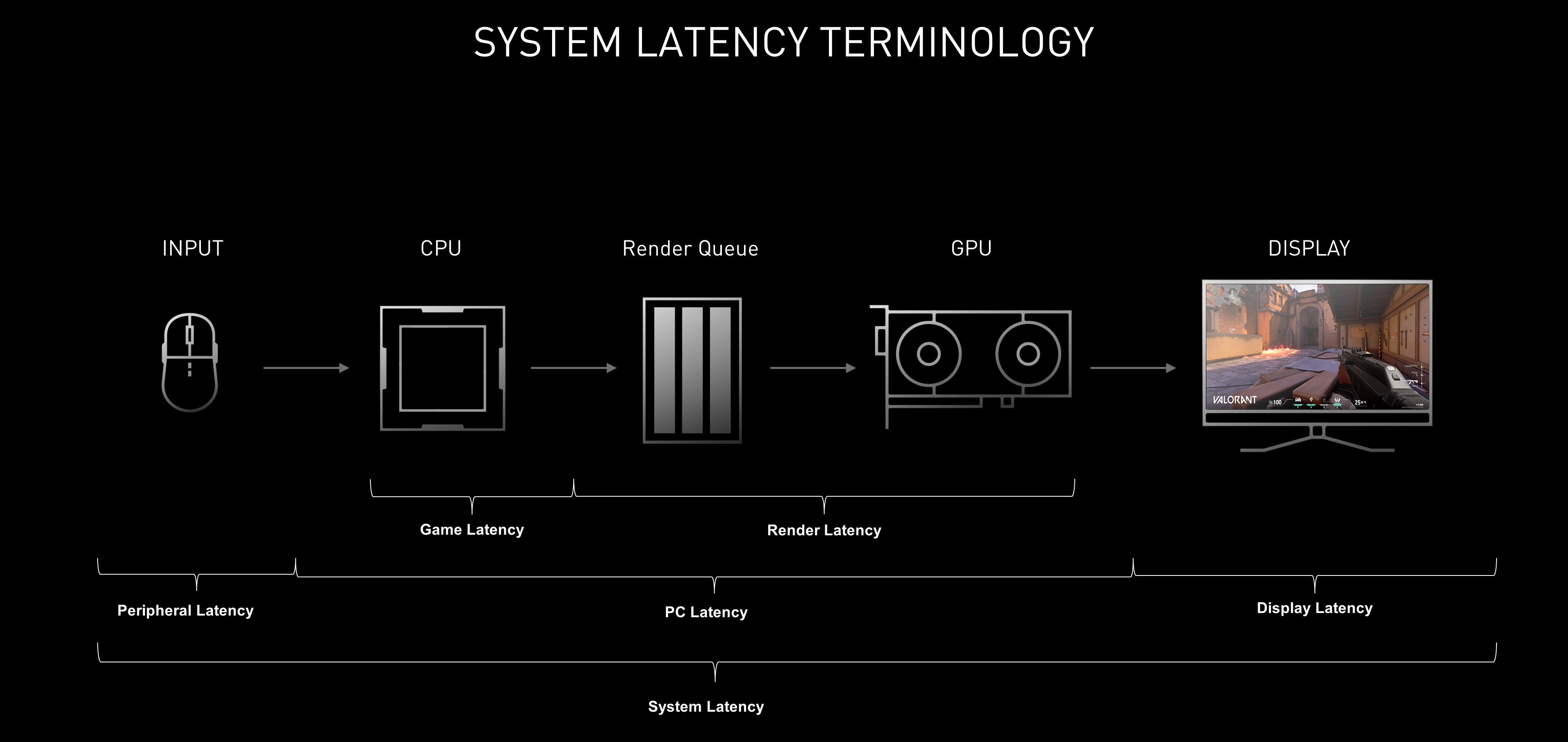
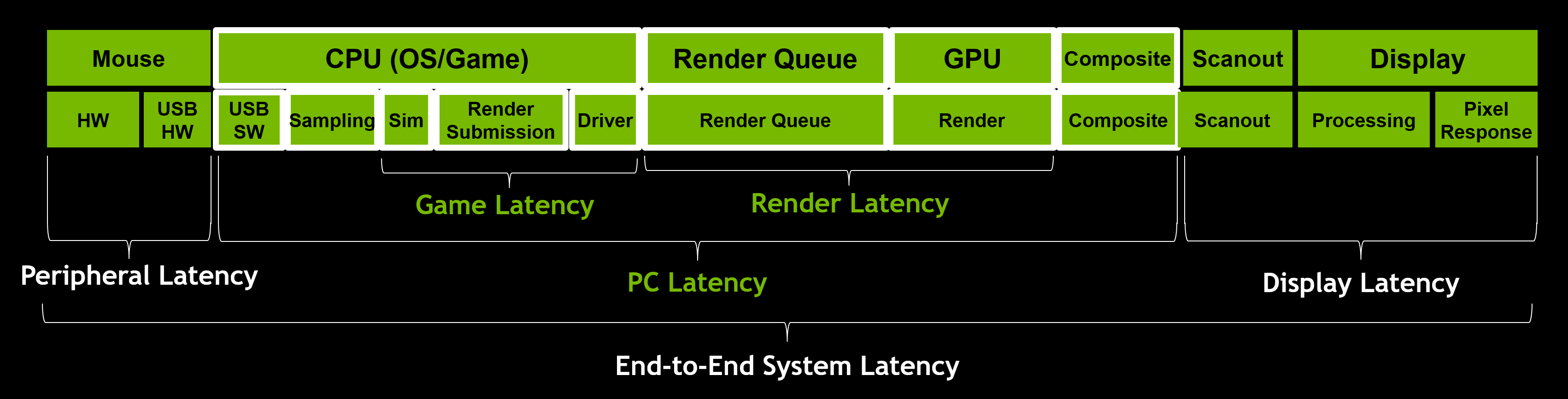
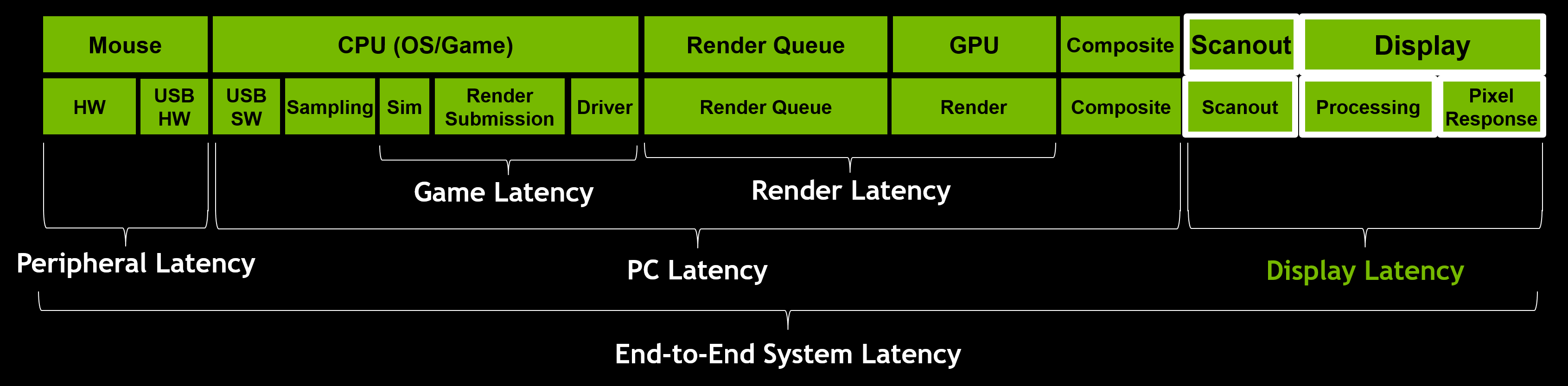
Every bit a gamer, organisation latency impacts united states of america in a number of ways: aiming precision, peekers advantage, and PC responsiveness. System latency breaks down into three fundamental parts: peripheral latency, PC latency, and display latency.
Using the NVIDIA Reflex Latency Analyzer integrated in G-SYNC 360Hz Esports displays coming this Fall, you tin can measure end-to-end system latency, peripheral latency, and PC+Brandish latency. Until you tin can get your hands on ane of these butter-smooth displays, you lot tin get started past measuring parts of the latency pipeline using in-game latency stats in games that take integrated NVIDIA Reflex technology, or with the rendering latency metric in the GeForce Experience performance overlay.
How To Optimize Peripheral Latency
Mice and keyboards sense and process central presses and movements. That processing fourth dimension can vary in elapsing depending on the mechanical parts used in the peripheral, the techniques used to handle click detection, and the polling charge per unit of the device.
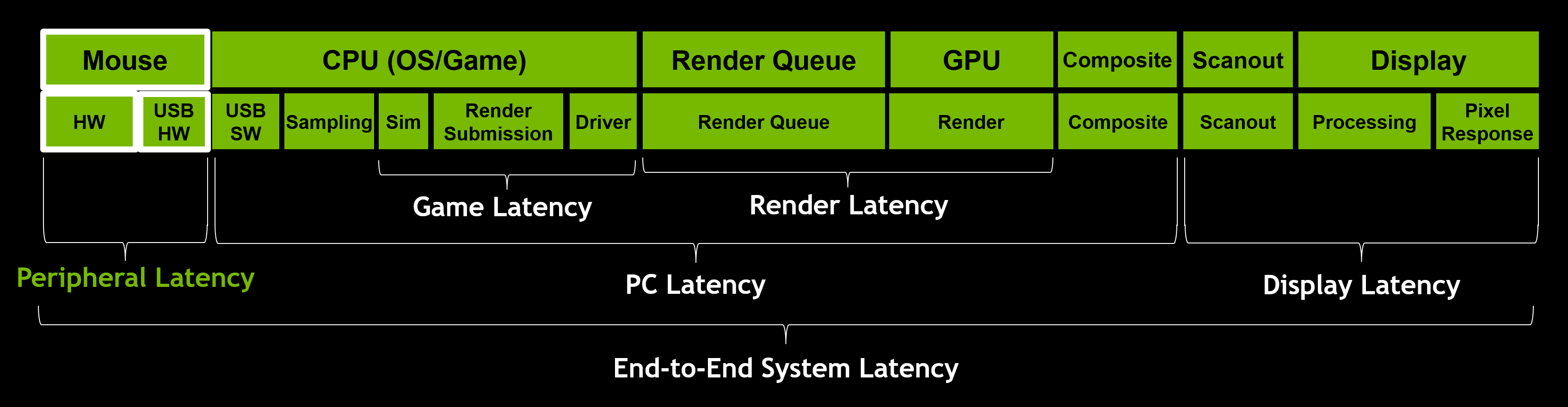
As gamers, we merely have a couple options when information technology comes to optimizing our mice and keyboards:
Increase your polling rate - Increase the polling charge per unit of your device to the maximum. The polling rate is how often the USB host (your PC) asks for data from the device. For low or full speed devices, that is 1000Hz. Higher polling rate means that your mouse can deliver more frequent clicks and movements to the PC.
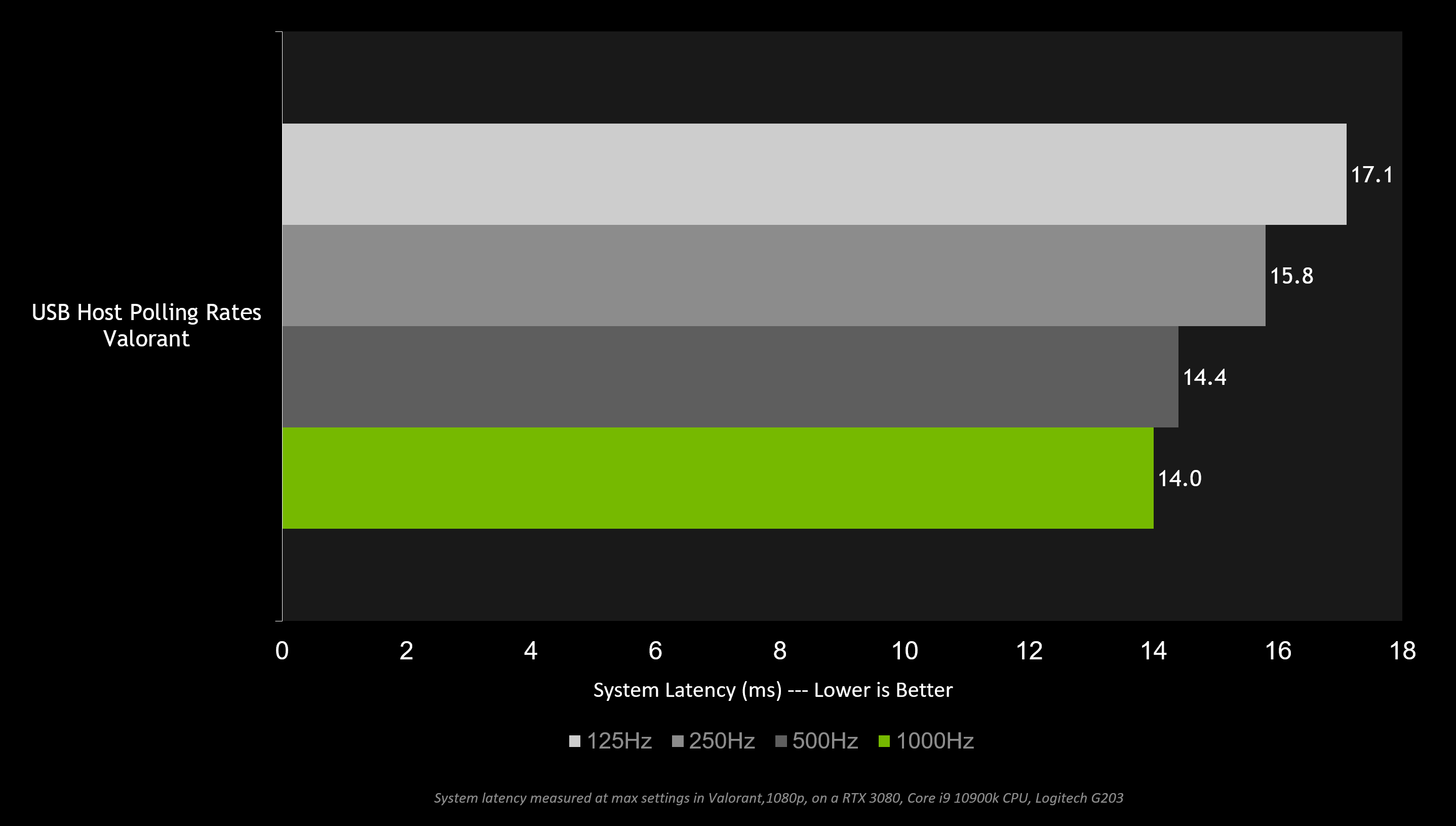
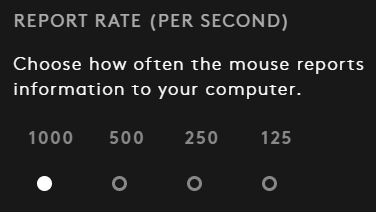
A low polling rate such equally 125Hz adds up to 3ms of arrangement latency on average compared to a 1000Hz polling charge per unit! If your mouse has an adaptable polling rate, you tin can frequently find this choice in your mouse's software, or by pressing a push button on the mouse.
Invest in a lower latency mouse/keyboard - Mice and keyboards can range anywhere from 1ms of latency to ~20ms of latency! Mousespecs.org has a groovy list of latency measurements to assist you empathise the latency of your mouse. Do note though -- there are other factors than latency to consider when choosing a great mouse, such as weight, maximum polling rate, wireless back up, and a way that fits your hand.
Annotation: your mouse sensitivity will not significantly impact the latency of the mouse. Higher DPI does not mean lower latency. Don't be agape to lower your DPI if you prefer lower sensitivity.
How To Optimize PC Latency
PC Latency is oftentimes the largest contributor to total system latency. This includes the Bone, game, and the rendering portions of the latency pipeline.
If y'all would like to optimize your PC for system latency, here are some helpful tips:
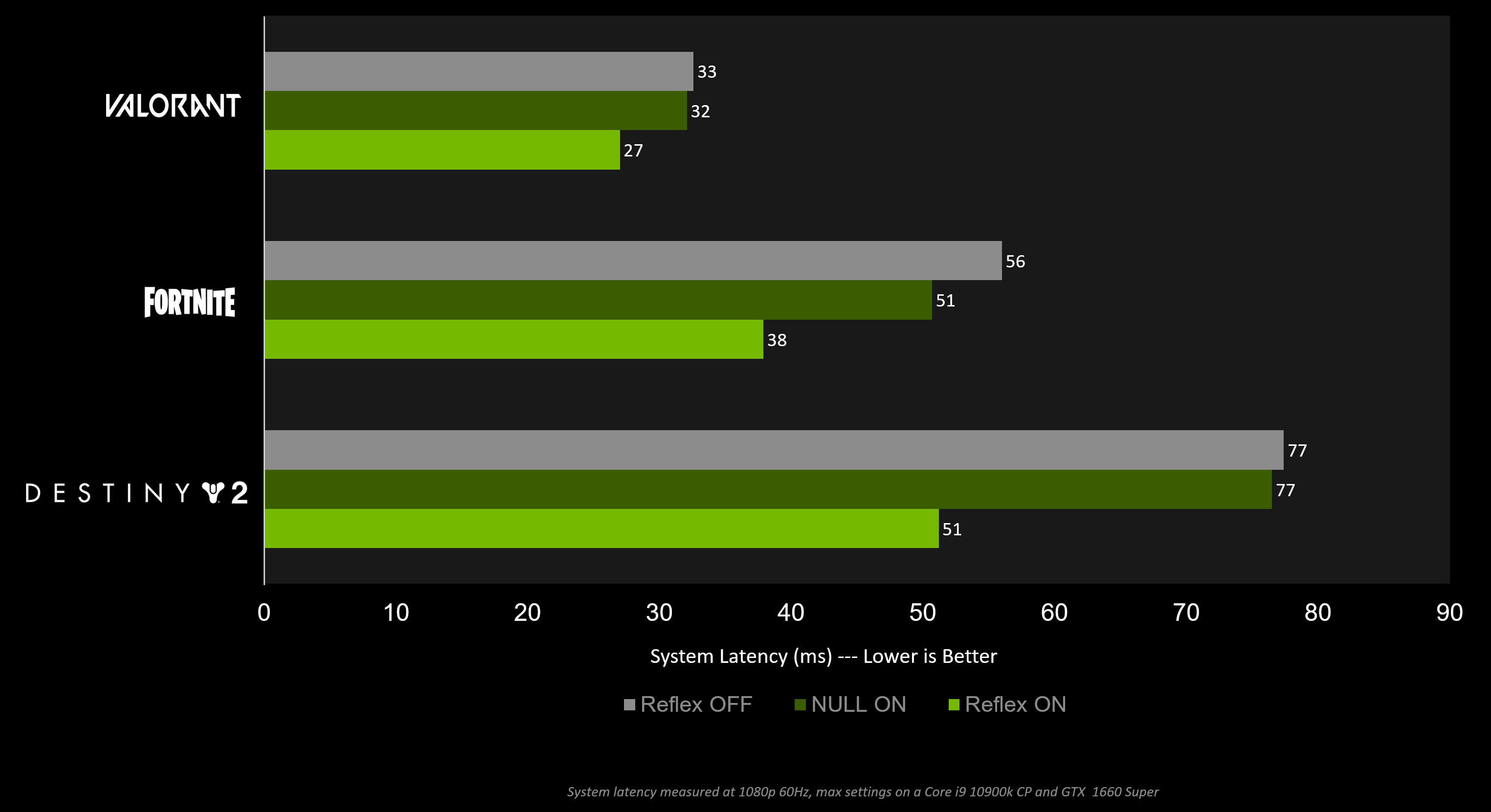
Turn on NVIDIA Reflex - If NVIDIA Reflex is available in your game, we highly recommend turning NVIDIA Reflex Depression Latency Mode to On. But navigate to the choice in your games options menu and turn on the setting. This will ensure your CPU is submitting work to the GPU only in time for it to be rendered.
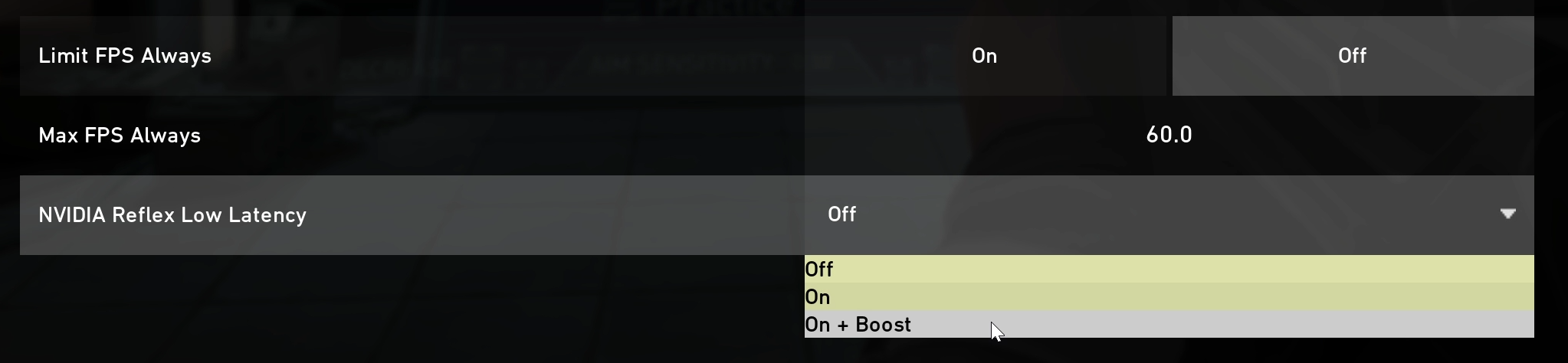
The NVIDIA Reflex Low Latency mode supports GPUs all the back to the GTX 900 series! Bank check our growing listing of supported games to see if you can take advantage of NVIDIA Reflex.
Turn on Ultra Low Latency Way - If NVIDIA Reflex is not bachelor, your next best choice is to turn on the Ultra Depression Latency mode in the NVIDIA graphics commuter. This setting also reduces the render queue, just does and then from the driver instead of the game.
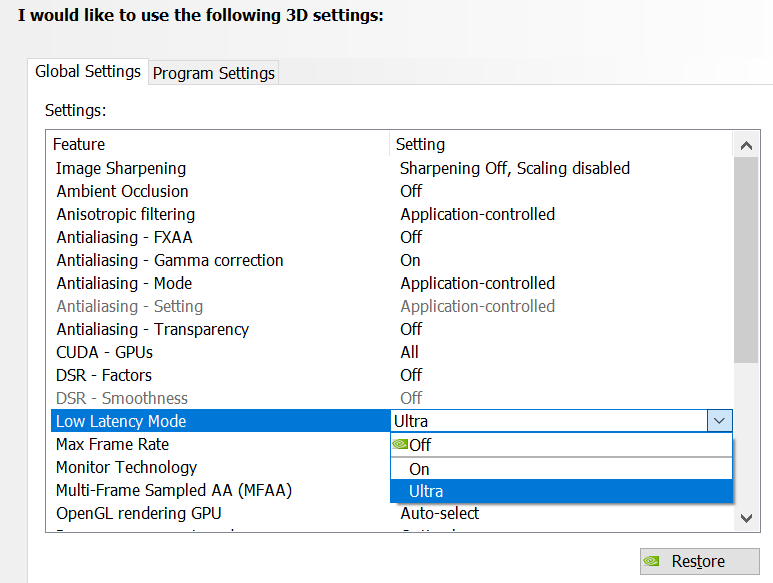
NVIDIA Reflex is more constructive at reducing latency and operates independently of NVIDIA Ultra low latency manner. If both NVIDIA Reflex and the Ultra Low Latency mode are enabled, NVIDIA Reflex will override Ultra Low Latency functionality.
Plow on Exclusive Fullscreen - If possible, always be in Exclusive Fullscreen mode. This will bypass the windows compositor that adds latency.
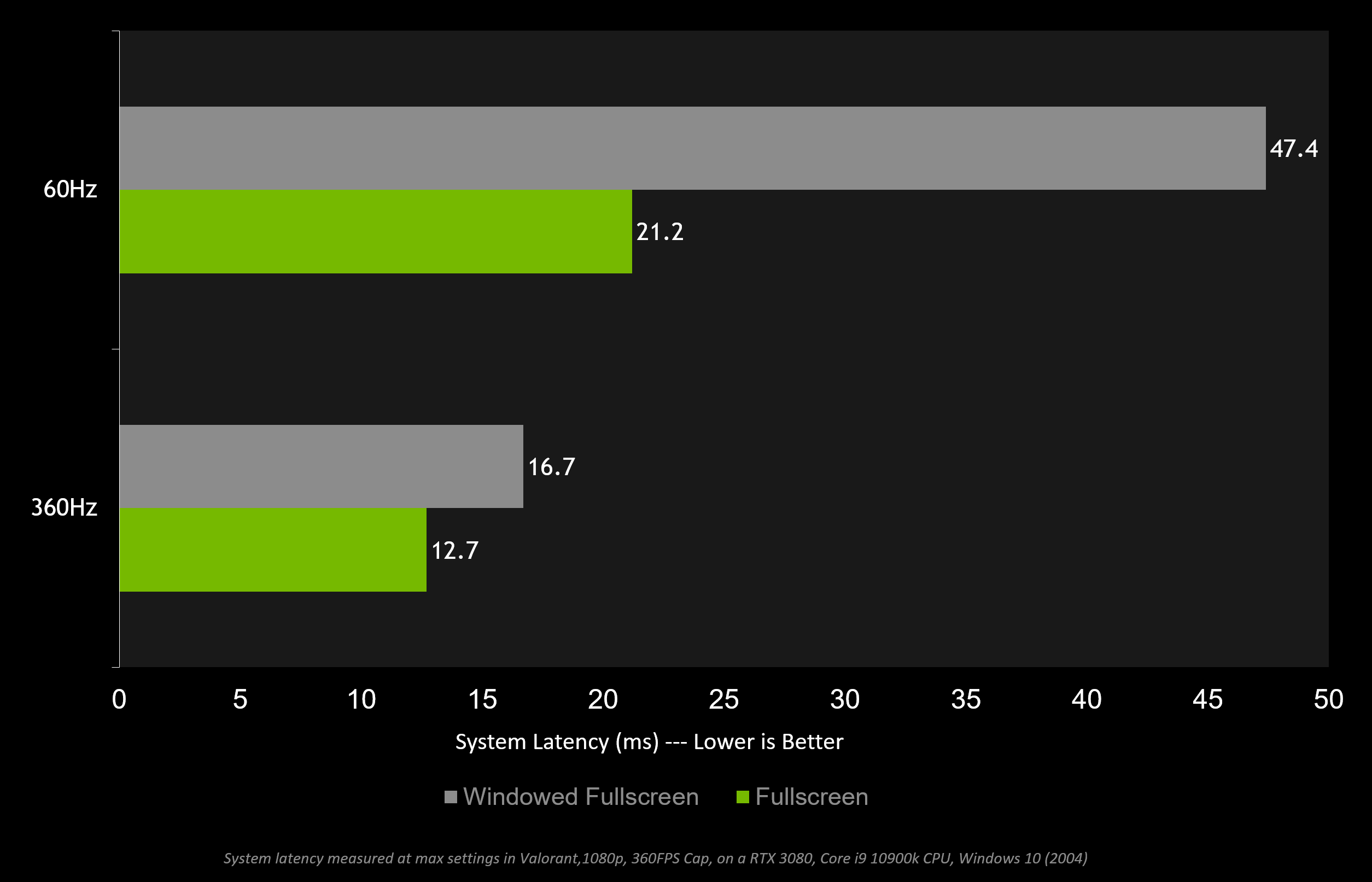
Display fashion options are typically found in your game's video settings. Merely get to the settings, and enable fullscreen or fullscreen exclusive style. In recent Windows updates, the latency of borderless windowed (windowed fullscreen) mode has slightly improved, just based on our tests we still recommend the fullscreen setting.
Plough off VSYNC - The age old latency optimization; turn off VSYNC. VSYNC causes back pressure from the display that reverberates through the entire organization. In general, we highly recommend turning VSYNC OFF if you are willing to tolerate tearing.
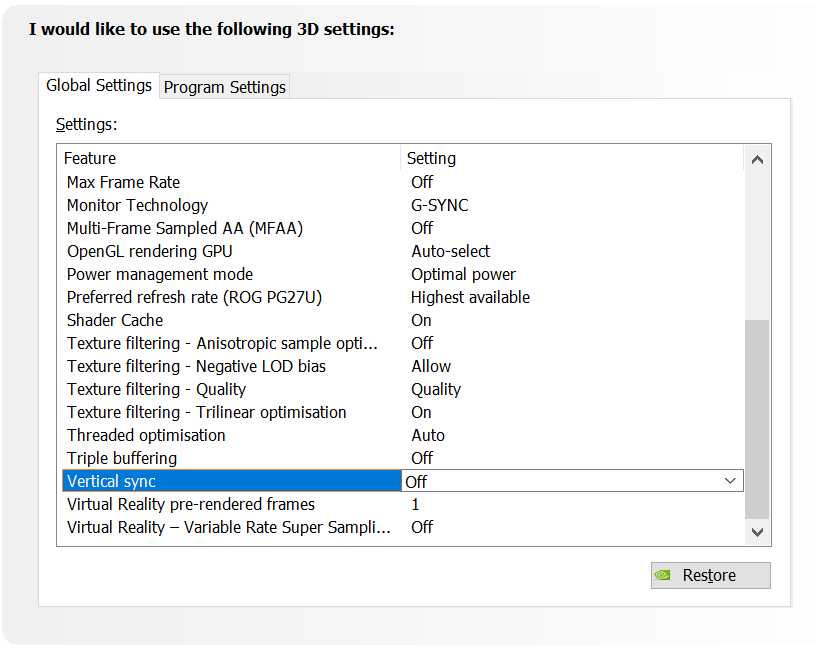
In improver to the NVIDIA Command Panel, don't forget to disable VSYNC in the in-game settings, as well.
Still, if you have a variable refresh rate display, similar an NVIDIA G-SYNC monitor, y'all tin get the best of both worlds: no fierce (if your FPS is below your refresh rate), and no VSYNC latency.
For G-SYNC gamers who don't want to tear, keeping VSYNC ON while using NVIDIA Reflex or NVIDIA Ultra Low Latency Mode, will automatically cap the framerate beneath the refresh rate, preventing VSYNC backpressure, eliminating tearing, and keeping latency low if you become GPU bound below the refresh rate of your brandish. Do notation, still, that this method will result in slightly college latency than just letting your FPS run uncapped with NVIDIA Reflex enabled.
Equally a side note, VSYNC ON in the NVIDIA Control Panel volition only piece of work for Fullscreen applications. In addition, MS Hybrid-based laptops do not support VSYNC ON. If you are gaming in windowed fashion or on one of these laptops, and want to use G-SYNC + VSYNC + Reflex mode, use in-game VSYNC.
Turn on "Game Fashion" in Windows - Turning on Windows Game Mode helps prioritize processes that are associated with your game. This can assist reduce latency by letting the CPU stay focused on collecting your inputs and simulating the game.
To plough Game Style on:
- Printing the Windows Commencement button, and then select Settings.
- Choose Gaming > Game Mode.
- Turn Game Style On.
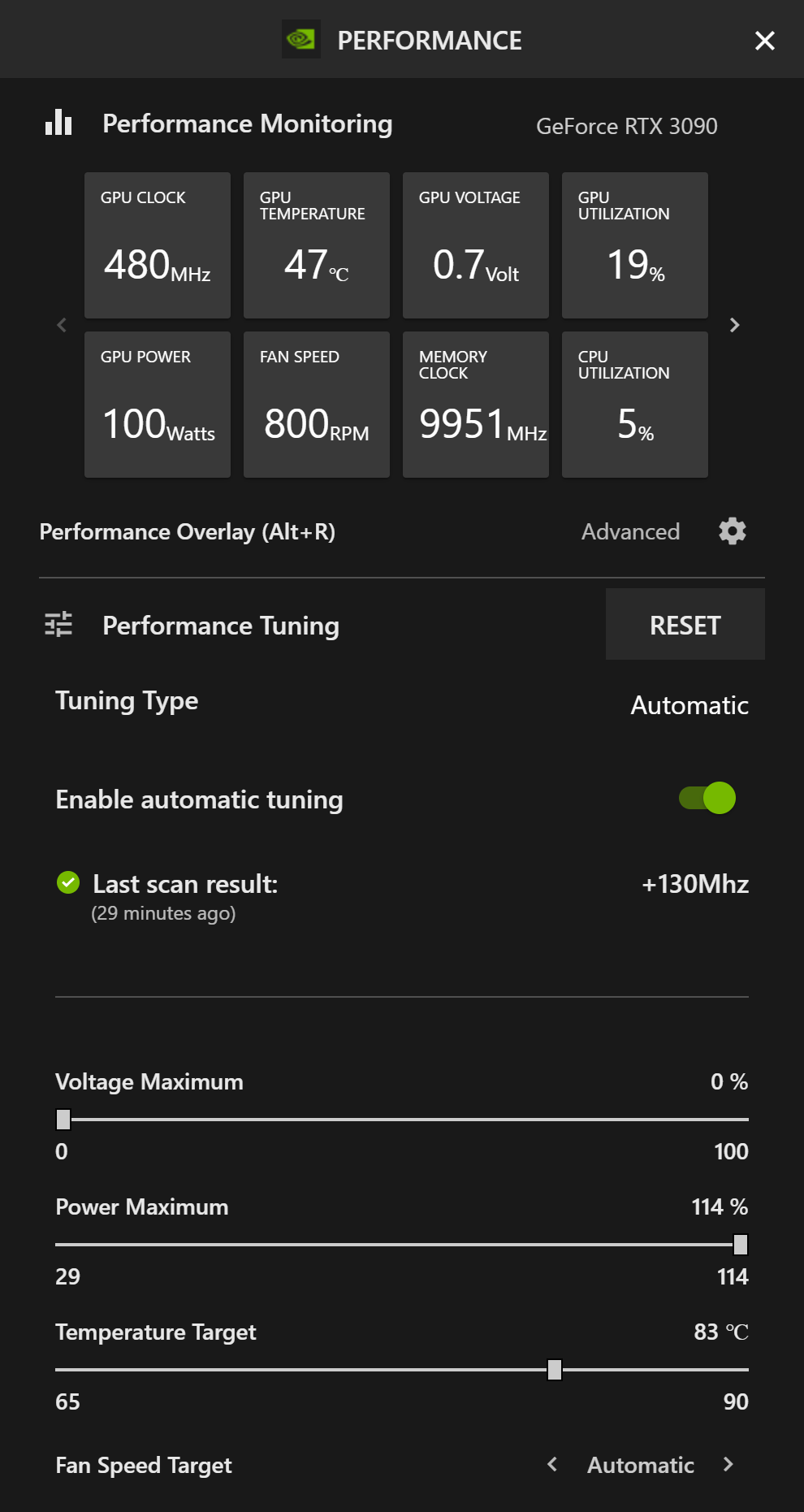
Overclocking - Overclocking can exist a nifty way to clasp a few extra milliseconds of latency out of your organisation. Both CPU and GPU overclocking can reduce total system latency.
In the latest release of GeForce Experience, we added a new characteristic that can melody your GPU with a single click. The automatic tuner scans your GPU, finding the platonic voltage/frequency bend to your item GPU. Download the GeForce Experience Beta, printing ALT+Z to open the overlay and click 'Operation', and give it a try on your GeForce RTX 20 Serial or 30 Series GPU today!
Consider Faster Hardware - At that place is but so much optimization you can do in software. At some indicate, the all-time way to become lower latency is to invest in faster hardware. A faster CPU and GPU can significantly reduce latency throughout the organisation.
Using the Game and Return latencies provided past the Reflex SDK in game:
- If your Game Latency is high, consider picking upwards a faster CPU.
- If your Render Latency is high, consider picking up a faster GPU like one of the GeForce RTX 30 Serial GPUs.
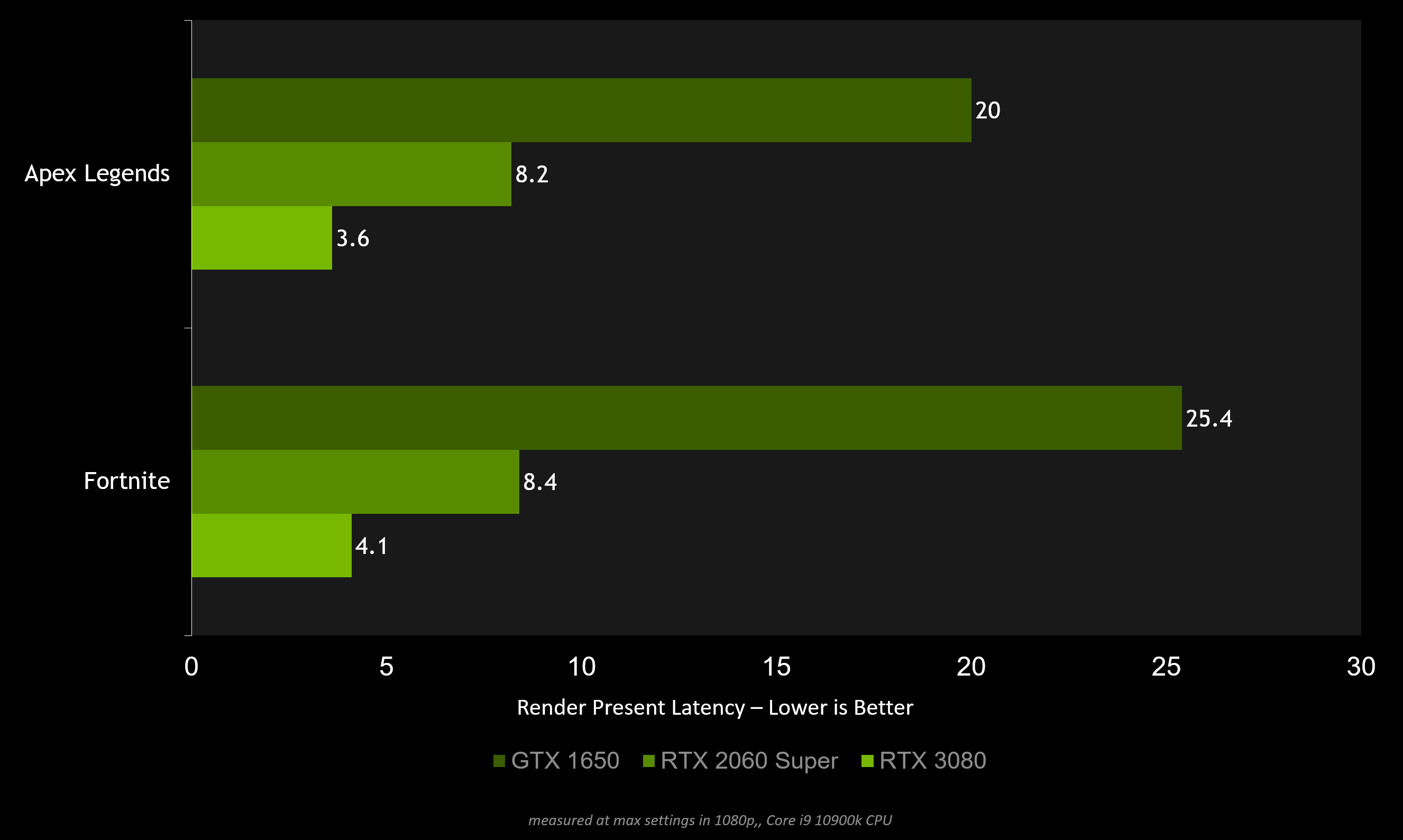
Render Latency can also be measured through the GeForce Experience performance overlay for whatsoever game.
Reduce settings - you can also make visual tradeoffs to improve performance and reduce latency by lowering in-game settings.
Earlier NVIDIA Reflex, gamers had to make this tradeoff between college graphics settings and better latency. With the NVIDIA Reflex Low Latency way, gamers can increase graphics settings and resolution without significantly increasing latency -- latency is merely increased by the raw GPU render fourth dimension.
Avant-garde PC Latency Optimization
There are other small tweaks that can exist done to help reduce latency such every bit MSI style, GPU enshroud write combining, procedure scheduling quantum modes, interrupt CPU analogousness, processor idle states, and IRQ sharing. Nonetheless, these optimizations are situational and tin can actually make latency worse in some cases. We recommend testing on your own system and experimenting to detect which modes help your particular configuration!
Each setting is non mutually exclusive or additive. In a hereafter article, we will dive deeper into each of these tweaks and help guide y'all through the experimentation process.
How To Optimize Brandish Latency
Display latency tin can be broken downwards into three chief pieces: Scanout, Brandish Processing, and Pixel Response.
If you want to optimize display latency here are things yous can do:
Enable your maximum refresh charge per unit - Bank check to make sure your brandish is set to the maximum refresh charge per unit. Higher Hz reduces the scanout latency.
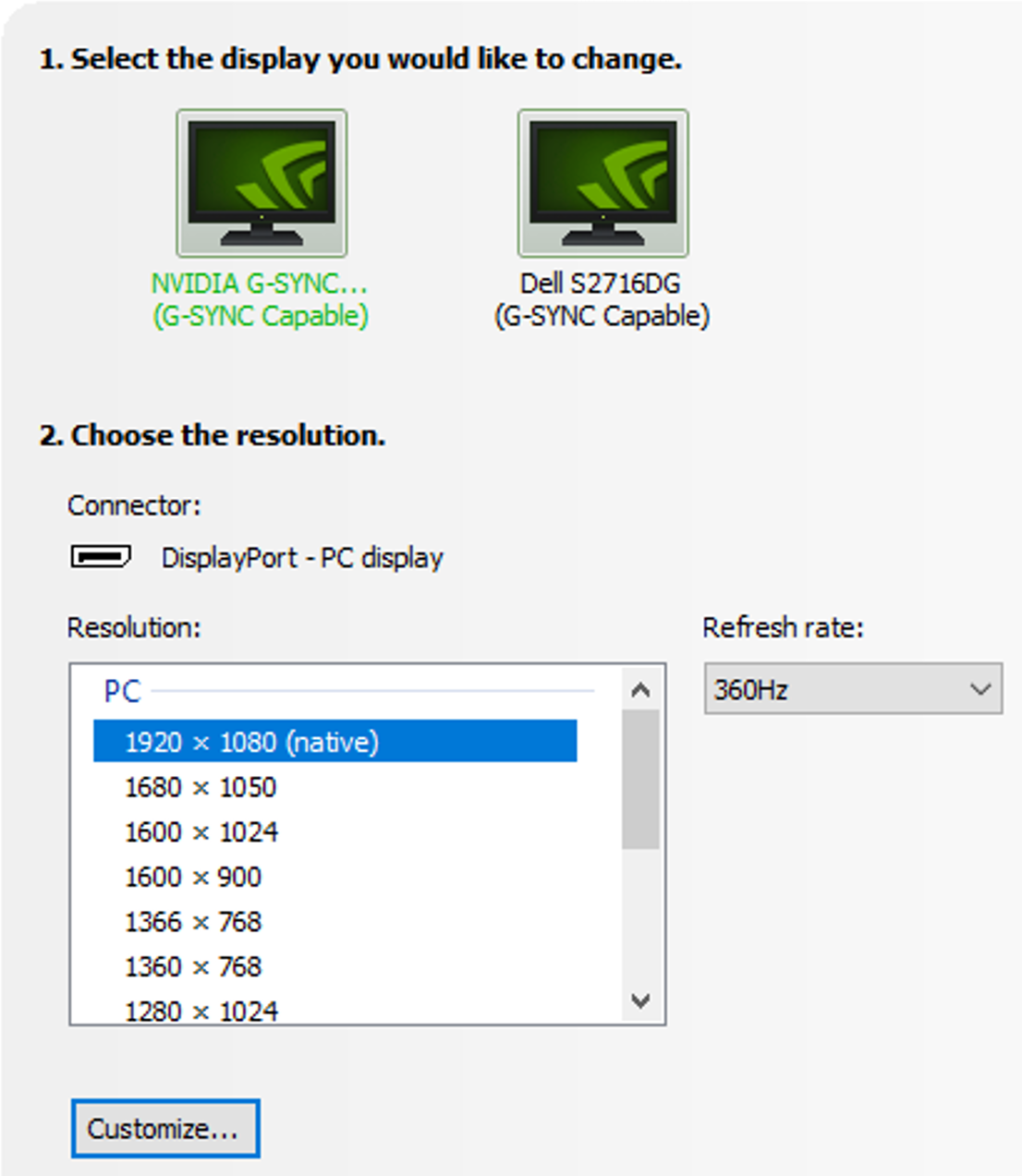
To ostend you are running at the highest refresh rate your display can offer, open the NVIDIA Command Console -> modify resolution -> refresh rate. Set the refresh rate to the highest possible. You might take to change your resolution to the native resolution to run at the maximum refresh rate.
Turn on M-SYNC Esports mode - If you take a monitor that supports Chiliad-SYNC Esports mode, enabling this option will ensure settings like variable backlight are disabled and the monitor is running at max performance - reducing brandish processing latency.
Plough on some overdrive - Use a moderate amount of overdrive to assist improve pixel response time. We recommend starting at the first level of overdrive, for almost monitors this is the "normal" setting. This setting can exist configured in your monitor's settings carte in the on screen display. However, too much overdrive tin can create distracting effects that will outweigh whatever response time benefits.
Invest in a higher refresh rate display - Invest in a college refresh rate and faster pixel response fourth dimension monitor like the new G-SYNC 360Hz displays.
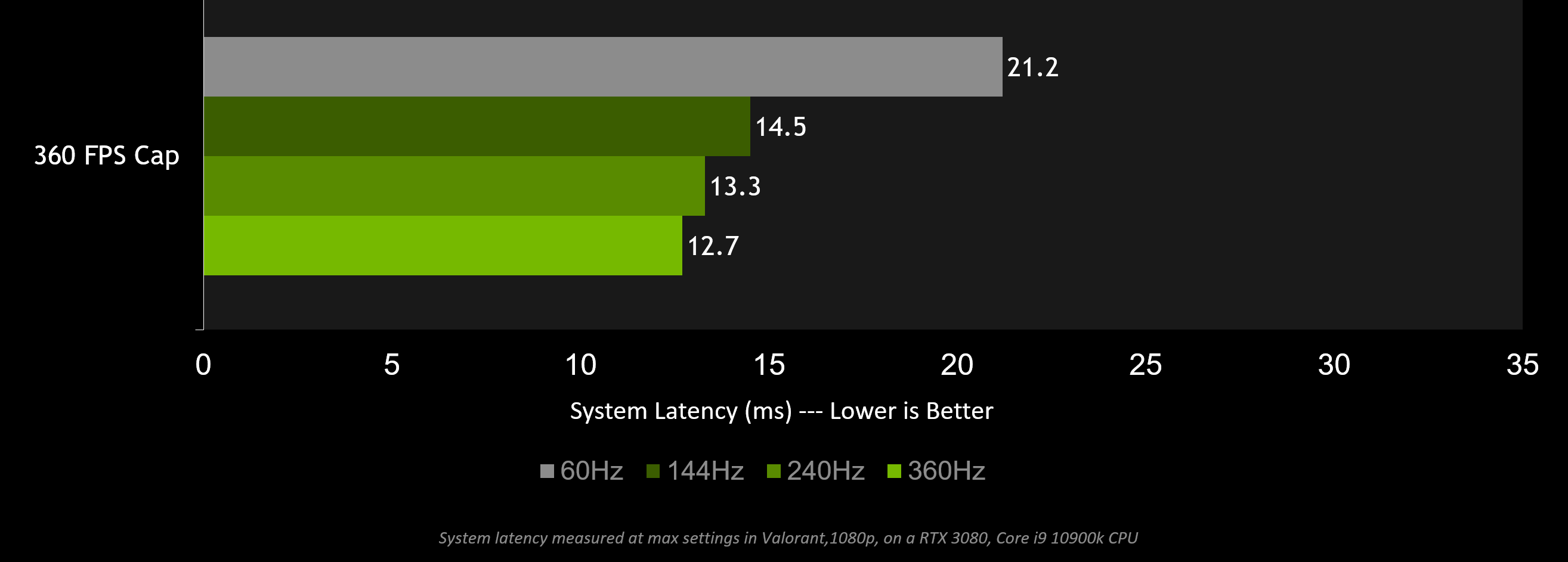
In full general, increasing your Hz is the all-time way to reduce display latency. The below chart shows how a higher refresh rate can reduce end to end arrangement latency in Valorant.
Wrapping up
Optimizing system latency can seem like a daunting task. If you play a game that supports NVIDIA Reflex, we highly recommend turning information technology on.
If you lot accept whatsoever questions, please bring together our customs and chat with us well-nigh your optimization experiences on the NVIDIA Reflex forums. Too, check dorsum at a subsequently engagement as we'll be updating this guide over fourth dimension equally new technologies and techniques for reducing latency go available.
Source: https://www.nvidia.com/en-us/geforce/guides/system-latency-optimization-guide/
0 Response to "How Do You Know if You Can Run Ultra Settings"
Postar um comentário